
Carpathians
Romania’s Great Mountain Wilderness
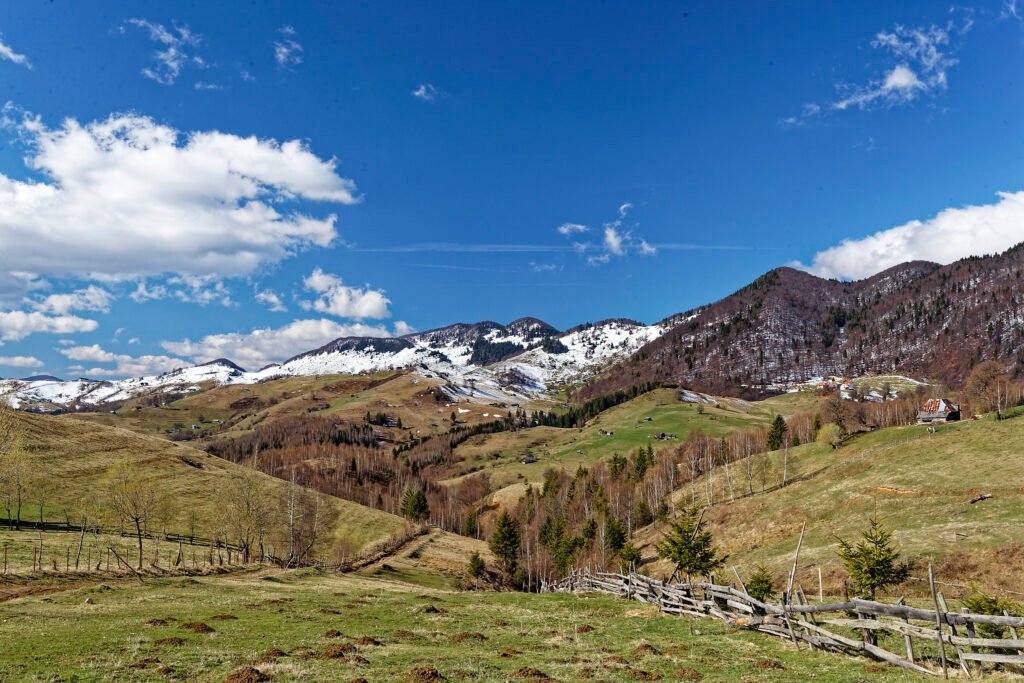
The Romanian Carpathians are one of Europe’s great mountain landscapes — a world of deep forests, alpine meadows, rocky ridges, river valleys, and traditional mountain pastures. For wildlife travellers, birdwatchers, and photographers, they offer something very different from the Danube Delta or Dobrogea: quieter forests, larger mammals, dramatic mountain scenery, and a stronger sense of remoteness. This is one of Europe’s most important refuges for wild nature, known for its biodiversity, old forest ecosystems, and remarkable range of habitats.
- One of Europe’s key mountain refuges for wildlife and large carnivores
- Extensive forests, alpine meadows, valleys, and traditional mountain landscapes
- Excellent for bears, wolves, lynx, forest birds, and mountain photography
- Home to UNESCO-recognized ancient and primeval beech forest components
- Ideal for wildlife watching, birding, photography, and multi-region Romania itineraries
Carpathians Highlights

Geography
The Carpathians form the great mountain backbone of Romania and are part of the wider Carpathian arc across Central and Eastern Europe. In Romania, they create a varied landscape of forested slopes, mountain basins, steep ridges, limestone massifs, river valleys, and high plateaus. This diversity of terrain is one of the reasons the Romanian Carpathians support such a rich mix of habitats and species.
Among the best-known mountain areas are the Făgăraș Mountains, noted for their scale and wildness; Piatra Craiului, famous for its limestone ridge and outstanding flora; and the Bucegi Mountains, which add high plateaus, steep valleys, and rocky formations to the wider Carpathian landscape. Together, these areas help define the character of Romania’s mountain wilderness.
Climate
The climate of the Carpathians changes with altitude and exposure. Lower slopes and valleys are generally milder, while higher elevations are cooler, wetter, and shaped by longer winters and shorter vegetation seasons. These mountain conditions create strong ecological contrasts between forest, subalpine, and alpine habitats, and they also give the region its changing moods of mist, snow, clear light, and dramatic seasonal colour.
For visitors, this means a landscape that changes constantly through the year: fresh green forests and active wildlife in spring, lush meadows and long light in summer, rich colour and clearer visibility in autumn, and a quieter, more atmospheric mountain world in winter.
Main Ecosystems
Broadleaf and mixed forests
Large areas of beech and mixed woodland form the ecological heart of the Romanian Carpathians. These forests are among the most important habitats in Europe for large mammals and forest birds, and some of their most valuable old-growth beech stands are part of the UNESCO-listed Ancient and Primeval Beech Forests of the Carpathians and Other Regions of Europe.
Conifer forests and upper mountain slopes
Higher up, the forest becomes darker, cooler, and more conifer-dominated. These habitats are especially important for shy mammals, owls, grouse, and specialist woodland species that depend on quieter mountain conditions.
Mountain pastures and hay meadows
Traditional mountain pastures and hay meadows are an essential part of the Carpathian landscape. They are not only beautiful, but ecologically rich, supporting a wide variety of plants, insects, and birds while preserving the cultural character of the mountains.
Subalpine and alpine habitats
Above the forests, the Carpathians open into windswept ridges, rocky slopes, and alpine meadows. These upper zones add another layer of diversity and give the region its dramatic mountain atmosphere, especially for wildlife photography and scenic itineraries.
Rivers, valleys, and gorges
Mountain streams, river corridors, and steep valleys connect the larger habitats of the Carpathians and support both wildlife movement and plant diversity. They also shape some of the most visually striking landscapes in the region.
- Capercaillie
- Hazel Grouse
- Ural Owl
- Tengmalm’s Owl
- Three-toed Woodpecker
- White-backed Woodpecker
- Black Stork
- Wallcreeper
- Alpine Accentor
- Golden Eagle
Birdlife
The Carpathians are a very different birding experience from the Delta. Here, the focus is on forest species, mountain birds, and the quieter rewards of patient observation in more enclosed habitats. The region supports a rich avifauna linked to woodland, old forest, upland meadow, and mountain-edge environments.
During our tours, some of the species most associated with the Carpathians include:
Depending on the season and conditions, guests may also encounter other forest birds, woodpeckers, raptors, owls, and mountain-edge species that make the Romanian Carpathians one of the most rewarding upland birding regions in Eastern Europe.

Plants and Landscape Character
The Carpathians are not only rich in wildlife, but also in plant life and botanical diversity. Old beech and mixed forests, spruce-dominated upper slopes, mountain meadows, rocky ledges, and subalpine grasslands all contribute to a layered and visually powerful landscape. In Piatra Craiului, official park information highlights more than 1,100 vascular plant species, including many rare species and a remarkable concentration of mountain orchids; the massif is also known for the famous Piatra Craiului Pink, one of Romania’s best-known endemic mountain flowers.
This botanical richness is part of what gives the Carpathians their special character. In spring and summer, mountain meadows and hayfields can be exceptionally rich in flowers and insects, while the forests and ridges of Făgăraș, Piatra Craiului, and Bucegi create a striking mix of colour, texture, and scale. The Carpathians are not only a wildlife destination — they are also one of Romania’s great landscape destinations.
Mammals and Other Wildlife
The Romanian Carpathians are especially famous for their large mammals. The Carpathian region holds some of Europe’s most important populations of brown bear, wolf, and Eurasian lynx, and Romania’s mountain forests remain core habitat for these species. For many visitors, the chance to experience a true mountain landscape where large carnivores still survive is one of the region’s greatest attractions.
Beyond the large carnivores, the Carpathians also support a wider mammal community that includes red deer, roe deer, wild boar, badger, pine marten, beech marten, wildcat, and otter, alongside many smaller forest and meadow species. This richness is part of what makes the region feel so complete as a natural system, not just as a scenic mountain destination.
Why Visit the Carpathians With Us
The Carpathians are best experienced with patience, local knowledge, and a strong feel for timing, weather, and habitat. This is not a landscape of instant spectacle at every turn, but one of atmosphere, subtle signs, and memorable encounters: the quiet of old forest, the movement of a bear at dusk, the call of a grouse at first light, or the sudden appearance of mountain birds along a ridge.
Our tours are designed to experience the Carpathians slowly, ethically, and in small groups, combining wildlife watching, birding, and photography with a strong respect for the rhythm of the mountains. This gives you not only a better chance of meaningful sightings, but also a deeper connection with one of Europe’s last great mountain wildernesses.

Tours in Carpathians
Romania’s Danube Delta & Carpathian Mountains – 10-Day Wildlife & Birdwatching Tour
Start from: 2290 € Start on 26 April 2026
Romania’s Danube Delta & Carpathian Mountains – 10-Day Wildlife & Birdwatching Tour
Start from: 2290 € Start on 11 May 2026